
After several months of delays related to manufacturing, Suffolk County's expansion of on-demand bus service to East Hampton Town is set to begin on Sunday.


Montauk Might Not Lose Its Only Pharmacy
Hang tight, Montauk — yes, the White’s Drug and Department Store building has a new owner, but the potential loss of the hamlet’s only pharmacy is not a foregone conclusion. That’s because the building’s new owner is a doctor himself who said he understands why pharmacies are important.
April 18, 2024
Police & Courts
On Pantigo Road near Bostwick’s, a 38-year-old man who appeared to be intoxicated was questioned by police on the afternoon of April 7. He said he wasn’t causing trouble, just canvassing businesses looking for work. Police drove him back to his house. Eight days before, the same man had been seen opening a storage shed and walk-in cooler behind Rowdy Hall in Amagansett, and he was later accused of taking 20 containers of beer and four containers of iced tea. According to the official report, petty larceny charges may be pending.
Apr 18, 2024
The Suffolk County Police Department on Wednesday identified a woman killed in a hit-and-run crash on Monday as Alison Pfefferkorn of Sag Harbor.
Apr 17, 2024
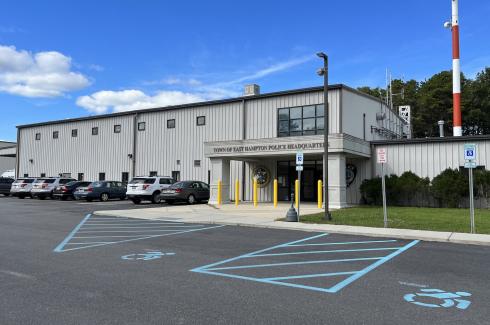
On March 27, a previously confidential legal document related to an ongoing complaint by Police Officer Andrea Kess against East Hampton Town and its Police Department became public when it was filed in a federal court as evidence in a new civil rights lawsuit, brought by Lt. Peter Powers of the town police. Lieutenant Powers is charging that the document, known as a “position statement,” has harmed his professional and personal reputation.
Apr 11, 2024
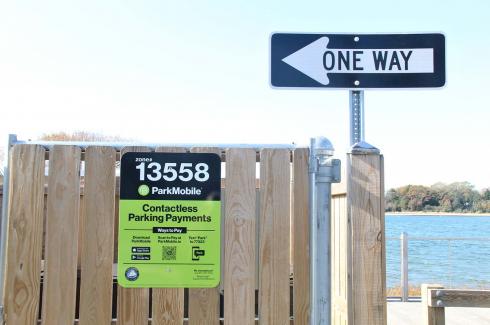
A Push for Paid Parking
Public officials in search of new revenue streams love paid parking. So now might be a good time to get familiar with ParkMobile, as the number of lots using it here is growing.
Apr 18, 2024
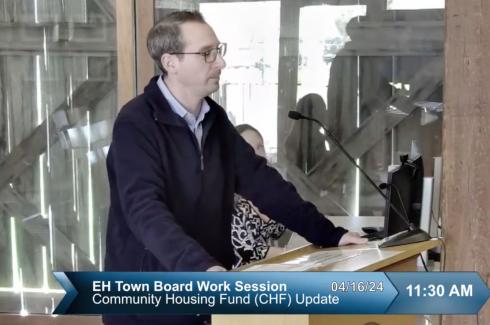
New Housing Fund Brings in $4.2M in East Hampton
East Hampton Town’s new community housing fund, voted into law in November 2022 and financed by a half-percent tax on real estate sales paid by the buyer, has brought in $4.2 million in its first year, Eric Schantz, director of the Housing and Community Development Department, reported to the town board on Tuesday. The money is intended chiefly for affordable housing and to help first-time homebuyers.
Apr 18, 2024
Government
On April 10, the federal Environmental Protection Agency issued a final determination on limits for “forever chemicals” in drinking water sources, along with a three-to-five-year timeline by which testing and remediation are to occur and about $1 billion in funding to support states, cities, and other municipalities in carrying out that testing and remediation.
Apr 18, 2024
Proposals to deal with wastewater at Rowdy Hall and two Montauk businesses, a hotel and a restaurant, were greenlighted at a town board work session last week. But the highlight might have been an eelgrass project for Napeague Harbor.
Apr 18, 2024

The Amagansett Citizens Advisory Committee, which in recent months has been debating the pros and cons of the proposed new East Hampton Town Senior Citizens Center, did so again this week, with many thorny questions still on the minds of members.
Apr 11, 2024

A rocky revetment, rocky relationships, and even conspiracy theories were on display at the East Hampton Zoning Board of Appeals meeting on April 2, during a public hearing involving a proposed 108-foot-long, 10-foot-high revetment at the end of Bay View Avenue on Napeague. The structure, meant to deflect waves, was instead creating them.
Apr 11, 2024
Arts

James Hamilton: From Film Sets to War Zones
Over the course of more than four decades, the photographer James Hamilton has plied his trade on the streets of New York, at music festivals, on film sets, at celebrity gatherings, even in war zones.
Apr 17, 2024

This year's Pachanga, a benefit for OLA of Eastern Long Island, will feature a dynamic salsa band, a multidisciplinary percussionist, and an actress and singer whose credits include Disney's "Mulan."
Apr 17, 2024

"The Art of Food" at the Parrish Art Museum features more than 100 works by 37 notable modern and contemporary artists linked by their choice of food as a subject.
Apr 17, 2024

Film Noir classics to launch retrospective tribute to Columbia Pictures at the Sag Harbor Cinema.
Apr 17, 2024
Villages

Ruta 27 Students Show How Far They've Traveled
With a buzz of pride and anticipation in the air, and surrounded by friends, loved ones, and even former fellow students, 120 adults who spent the last eight months learning to speak and write English with Ruta 27 — Programa de Inglés showcased their newly honed skills at the East Hampton Library last week.

Breaking Fast, Looking for Peace
Dozens of Muslim men, women, and children gathered on April 10 at Agawam Park in Southampton Village to celebrate Eid ul-Fitr and break their Ramadan fast together with a multicultural potluck-style celebration. The observance of this Muslim holiday wasn't the only topic on their minds.

Item of the Week: Anastasie Parsons Mulford and Her Daughter
This photo from the Amagansett Historical Association shows Anastasie Parsons Mulford (1869-1963) with her arm around her daughter, Louise Parsons Mulford (1899-1963). They ran the Windmill Cottage boarding house for many years.