
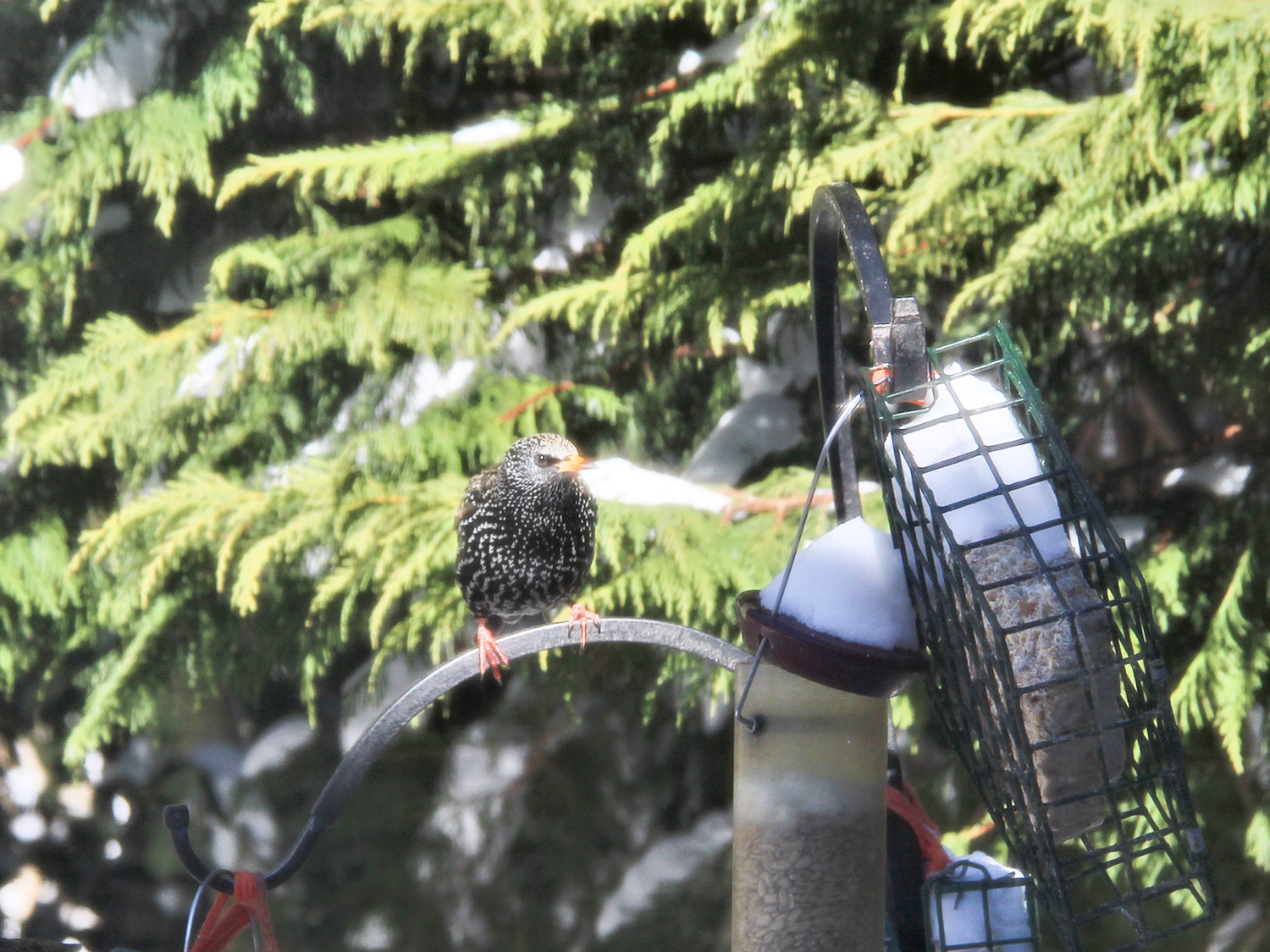
November is the month when a dedicated group of citizen scientists begin to count birds as part of Project FeederWatch, a Cornell Lab of Ornithology program now in its 37th year.
The “watch period” began yesterday, but it’s not too late to sign up. FeederWatchers can make reports until April 30, 2024.
It’s simple. Go to feederwatch.org, pay $18, learn how to report your birds, get some swag that will help you make proper identifications, and you’re on the team.
The data allow scientists to understand how populations and distributions of birds are changing, which can inform conservation measures. Participants need not be expert birdwatchers. Over 20,000 watchers participate annually, up from the first season in 1987 when 4,000 people enrolled.
“Even counting birds once or twice all season has value,” reads a press release. “No feeder necessary, either. If special plantings or a water feature are part of the count site, birds attracted to these items can also be reported to FeederWatch.” For example, if you plant bayberry on your property, odds are right now it’s attracting yellow-rumped warblers, our winter warbler. (A whole section of the FeederWatch website is dedicated to planting native species to attract birds.)
Emma Greig, the FeederWatch project leader in the United States, was asked at a webinar Monday if feeding birds changes their behavior.
“Maybe, a little bit, sometimes,” she said. “Is that a bad thing? I don’t know. What would be natural? Whatever doesn’t include humans? It’s real hard to put a good/bad on these things.” Kerrie Wilcox, from Birds Canada, offered, “Sometimes your food during an extreme weather event might be that little bit they need to get through.”
However, one thing is clear: Bird feeding and watching is an increasingly popular activity.
A nifty feature at feederwatch.org, called “Common Feeder Birds Interactive,” allows the curious to input their type of feeder with the type of food they use. From that information, a list of the types of birds you can expect to see is generated. Participants can also record mammals and report sick birds. There’s also a photo and essay contest.
Margarette Doyle, a Springs resident, has joined Project FeederWatch for the past five winters and her family has found it enriching. With her husband and two children they maintain a “house list” of birds that have visited their property.
“It’s fascinating to see the patterns of bird behavior over the winter months,” she wrote in a text. “There is great excitement when some rare bird shows up at the feeders and also some sadness when a hawk comes to dine. But knowing that all birds need to eat makes that sadness a little easier to bear.”


