
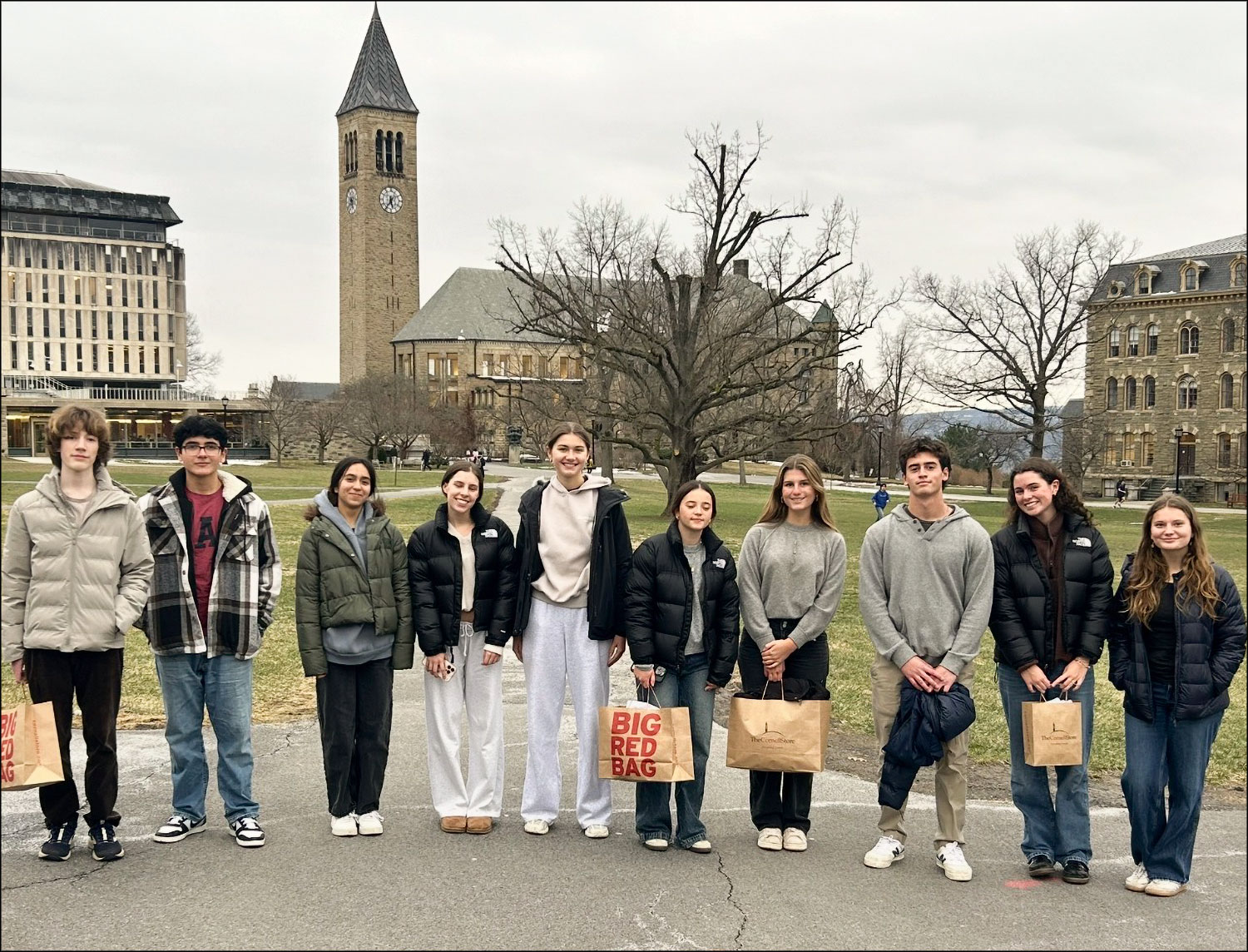
A competition at Cornell University earlier this month just might restore your faith in our future. On March 20, 10 East Hampton High School students made their way to Ithaca to attempt to solve the world’s food problems.
Participating in the World Food Prize New York Youth Institute, they met one on one with top agricultural experts to address critical global challenges and explore meaningful ways to make a difference. Each of the students selected a country of interest, identified its three most significant issues related to food security, and wrote a 2,500-word essay suggesting unique methods of solving the problem. They also toured Cornell and had exclusive access to the school’s admissions department.
“We did a campus tour with East Hampton alumni and the next day we went to the World Food Prize Conference and then we broke out into separate rooms with seven other kids and a judge and we all presented our countries with the food insecurity and our proposed solutions, and then we asked each other questions and got to learn about each other’s topics,” said Carli Stuckart, a junior. “I picked the Philippines, which has coastal habitat destruction, pollution, and environmental challenges. My main solution was oyster reef restoration. My others were climate resilient crops such as floodtolerant rice, improved governance, and fishing regulations.”
While Carli selected an island nation with similar challenges to those on Long Island, other students picked countries with vast differences. Cadence Page, a sophomore, chose the Cayman Islands. “I found it interesting how heavily they rely on imports due to their islands being limestone with extremely poor soil. I found that if hydroponics there were created into a much more advanced, larger system, they could use hydroponics to start growing more fruits and vegetables.”
“I chose Zimbabwe,” Jackson Ronick, a junior, said. “I wanted to pick somewhere I’ve been and it has a very big food insecurity problem with climate change, which has gotten worse in recent years. There are a few things that go with that: soil erosion, more drought than normal, and also El Niño and La Niña events happen more often now. My solutions were conservation agriculture, climate information — so giving information to rural farmers about when to plant — and . . . crop diversification to use crops that need less water to grow.”
“I loved being able to discuss with and ask questions of the other students around New York State, meeting a lot of new people and hearing about a lot of new topics,” said Alessa Picco, a junior. “I chose Brazil because my mentor in the science research program is from Brazil and just hearing about his research and what he’s trying to do to help a certain fruit in Brazil using the topic that I’m doing — nanotechnology — was really interesting. And Brazil is also a leading agricultural producer, however, it’s being affected by climate change, destroying agriculture and crop yields, especially in the rural areas.”
Beatrice Flight, a junior, researched Myanmar because it’s in such desperate need of help between food insecurity and its civil war. “I had to really account for a lot of other factors in my solutions because there is a really bad civil war going on right now with the current military junta in control,” she said. “My main problem was climate volatility and my solutions were to move towards salttolerant rice varieties because flooding and cyclones have been pushing seawater inward and contaminating the soil, making it really hard for their main crop, rice, to grow, and restoring the mangroves that grow along the shoreline to buffer against those floods and cyclones and make a natural blockade.”
The students are all part of East Hampton High School’s science research program, but this work is independent. “The prep is huge and it’s all outside school hours. We’re helping them with essay prep and the research that goes into it,” said Stephanie Forsberg, who works with the students in both programs. “It’s offered to all of our students in the science research program and it has to be students who are hard-working, because it’s additional on top of sports, theatrics, and their other research.”
Paul Rabito also leads the kids in both programs. “This is our third year and these kids have the opportunity to advance now to a competition in Iowa, where the World Food Prize institutes are in Des Moines. We took two kids last year and they competed.”
Daniel Byrnes, a sophomore, was fascinated by Mongolia and its nomadic people. “They have really bad winter storms that starve their livestock, which is a major part of nomadic life, and to solve it I came up with using current climate change data and data on storms to make a better forecasting system, which can then be sent out to the people. Another solution is to have feed storage systems in towns.”
Matthew Calle, a junior, chose to research water scarcity in Kenya. “It led to drought and crop collapse. I proposed solutions of solar-powered irrigation. I also came up with drought-tolerant seeds like sorghum and millet and also weather-index insurance. When rain falls below a certain threshold, they pay the farmers.”
It’s no surprise that Ella Menu, a junior, focused on Peru and its fishing industry, given her family’s love of the water. “I knew I wanted to do something with the ocean because I’ve grown up along the coast, going to the beach, it’s my favorite place in the world,” she said. “I noticed in Peru they’re heavily impacted by the El Niño climate event. Their fishing industry is so heavily impacted, especially during those El Niño years. So much of their population as well as their exporting depend on their fish because they have one of the most productive marine ecosystems in the world off their coast. It was important to look at other countries and how certain solutions were implement ed in places that were also struggling with the same problems in their fishing industries. Bangladesh expanded their aquaculture industry tremendously and I found if similar steps were taken in Peru, poverty would be reduced and nutrition would be improved. Being able to farm fish on land in a controlled environment was the best solution.”