
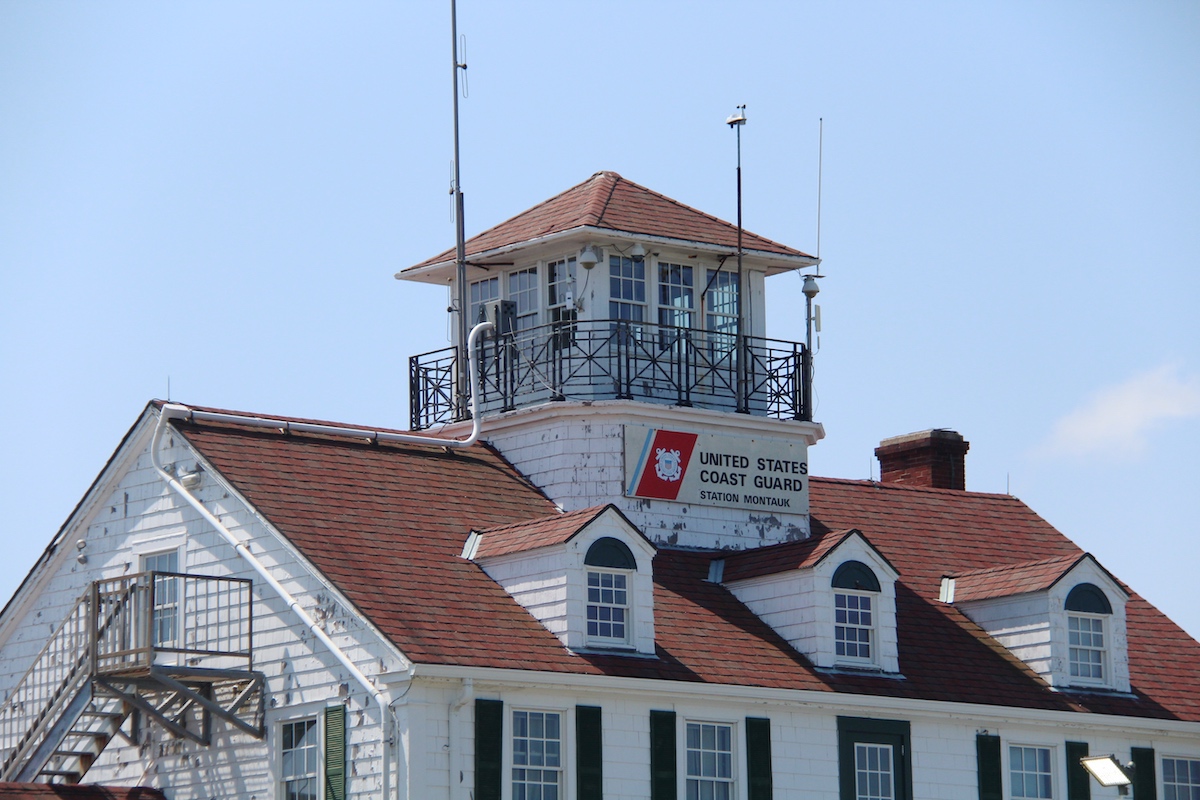
A man was rescued three miles southwest of Montauk Wednesday free-floating in the ocean with no life jacket. The one thing the man did have — an emergency position-indicating radio beacon, or EPIRB — allowed Coast Guard Station Montauk and the Air National Guard to locate and save him.
"Watchstanders at the Northeast District Command Center received an EPIRB alert at approximately 11:24 a.m. from the 39-foot commercial fishing vessel Miss Alexa," a press release from the Coast Guard read. "The vessel's owner confirmed the boat was underway with one person aboard but was operating a separate vessel north of Montauk. Multiple attempts to contact the operator were unsuccessful."
Coast Guard Station Montauk launched a boat, and the Air National Guard diverted a nearby HC-130 Hercules aircrew to the scene. The Army National Guard also dispatched two HH-60 Black Hawk helicopters.
"Upon arrival, the HC-130 crew established communications with Coast Guard responders and located debris in the water consistent with the reported distress," read the press release. "The HC-130 coordinated with inbound Army National Guard helicopter crews to begin search patterns and remained overhead to direct the operation."
They found the man, who was not identified, not far from the debris field. "The vessel sank immediately," said Petty Officer Sydney Phoenix of the Coast Guard. What caused the Miss Alexa to sink is still under investigation. The home port of the Miss Alexa was not provided.
"It's miraculous that we found him. He was floating in the water for an estimated two hours," Petty Officer Phoenix said. "The EPIRB saved his life."
The water temperature in the area was 67.5 degrees at the time the vessel sank.
According to a National Weather Service chart about cold water danger, in 60-to-70-degree water, a person loses dexterity in only 30 to 40 minutes. Exhaustion or unconsciousness set in after between two and seven hours, with an expected survival time anywhere from two to 40 hours.
In other words, the man, who was in stable condition with a lacerated finger, was rescued just before serious problems could have set in.
"When we arrived on scene and saw the debris, we knew this wasn’t going to be an everyday search and rescue case,” said a Coast Guard Station Montauk crew member.
According to Petty Officer Phoenix, the man’s family was waiting in Montauk for his arrival. One could imagine it was quite a scene.
“Finding the mariner and reuniting him with his family is why we do this job,” the crew member said.
“This case illustrates the importance of having adequate safety equipment in working condition and properly registered,” Mariah Dewey, a Sector Long Island Sound command duty officer, said. "If not for the EPIRB, the Coast Guard’s response would have been significantly delayed and may not have had the same outcome."
The Coast Guard urges all mariners to ensure their EPIRBs are properly registered and maintained, and to always wear life jackets while on the water. "These devices are critical in alerting rescuers and can make the difference in an emergency," their press release read.